
What HHS’s Own Numbers Say About “Flexibility” for Head Start
HHS is calling its proposed changes to the Head Start Program Performance Standards a matter of “flexibility.” But a close look at the Department’s own Regulatory Impact Analysis tells a more complicated story, one with real consequences for the children, families, and staff that Head Start programs serve here in Wisconsin and across the country.
A new policy brief from the Pennsylvania Head Start Association and Together for Head Start, “False Flexibility: What the Federal Government’s Own Analysis Reveals About the Proposed Head Start Rule,” walks through what the proposed rule actually says, and what HHS’s own analysis projects it would mean in practice. We want to share what the brief found, and make sure our own community has an easy way to weigh in before the comment period closes on October 6.
What’s in the proposal
The proposed rule, published August 7, 2026, would eliminate more than 90% of the current Head Start Program Performance Standards. Current standards run about 50,000 words; the proposed replacement is roughly 3,600. Among the changes:
- Teaching and learning standards are mostly removed. Requirements for teacher training, coaching, curricula, group size, and teacher-child ratios would go away, with programs instead following whatever ratio and group size rules apply under their state’s child care licensing law, whether or not the program is otherwise required to be licensed.
- Health and safety requirements are significantly scaled back. Annual staff training on preventing abuse and neglect, and the requirement to supervise children at all times, would no longer be federally required. Programs would instead rely on state licensing and child protection law, which varies widely by state.
- Comprehensive services are narrowed. Requirements around developmental screenings, timely medical and dental homes, and follow-up care are removed, replaced with a general directive that programs set their own goals for health, nutrition, and family engagement.
- The administrative cost cap drops from 15% to 5%, cutting the resources programs can use for fiscal management, HR, data systems, and other operations by two-thirds.
- Instruction would be required in English, with an exception for Tribal grantees using Tribal languages, and standards supporting dual language learners would be removed.
What HHS’s own analysis says the savings would come from
HHS estimates the changes could free up about $2.2 billion a year by 2031, funding as many as 236,000 additional Head Start slots nationally. But the proposal does not add new federal funding to make that possible. According to the Department’s own analysis, nearly all of the projected savings would come from programs doing less, not from new resources:
- Larger classes, fewer teachers. Removing federal ratio and class size standards is projected to increase the average number of children per teacher by roughly 32%, alongside an estimated 13% reduction in the Head Start teaching workforce.
- Less time in the program. HHS anticipates programs reducing instructional hours and home visit duration, and the analysis acknowledges families could face added child care costs or lost work hours as a result.
- Fewer health and mental health services. The proposal is projected to save $111 million a year through reduced health, mental health, and dental staffing and services.
- An English-only mandate with real costs and no identified educational benefit. HHS estimates the requirement would affect nearly 18,800 classrooms and more than 34,000 teachers, at an estimated $47 million to replace materials and retrain or replace staff.
- New barriers for children experiencing homelessness. HHS estimates that roughly 8% of currently enrolled children could become ineligible under new documentation requirements, even as the Department acknowledges families experiencing homelessness may have particular difficulty producing that documentation.
- A two-thirds cut to administrative funding, the single largest driver of the projected savings, at $754 million a year.
These aren’t estimates from opponents of the rule. They come directly from HHS’s own Regulatory Impact Analysis.
Why this matters in Wisconsin
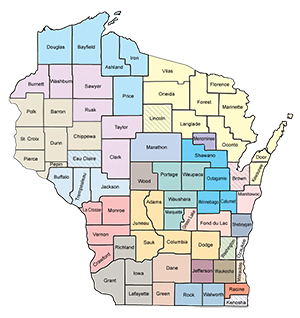
Wisconsin’s Head Start and Early Head Start programs serve more than 12,000 children and pregnant women across the state each year, through 75 programs spanning community action agencies, tribal governments, school systems, and nonprofit partners. Changes of this scale to staffing ratios, health services, and program hours would be felt directly in classrooms and home visits across Wisconsin communities.
WHSA has consistently supported strong health and safety standards, robust family engagement, and services that meet the needs of Wisconsin’s Head Start families. Weakening the federal standards that guarantee those protections doesn’t align with what Wisconsin communities have told us they need from Head Start.
What you can do
The proposed rule is open for public comment through October 6, 2026. Here’s how to stay informed and make your voice heard:
Read the policy brief. Get the full picture of what’s being proposed and what HHS’s own analysis reveals. Read “False Flexibility” here.
Head Start staff: sign the staff sign-on letter. Sign here by September 25, 2026.
Parents and families: sign the parent sign-on letter. Sign here by September 25, 2026.
Anyone who cares about this issue: submit a public comment. Comments that focus on one specific, personal example of how these changes would affect you, your program, or your family tend to carry more weight than comments that try to cover everything. Write your public comment here.
If you’re not sure where to start, we’ve made it easy. Submit a comment and message your elected officials through our Congress Plus action alert here.
Public comments are one of the most direct ways Wisconsin’s Head Start community can be heard in this process. We encourage every director, teacher, family, and community partner to take a few minutes and make their voice part of the record.
Advocacy Is How Head Start Wins
Advocacy is central to WHSA’s mission. Whether it’s protecting funding, shaping policy, or making sure lawmakers hear directly from the people doing this work, your voice matters. Here’s how to get involved:
Join Our Advocacy Email List
Stay informed on policy updates and action opportunities
Take Action: Protect Head Start's Health & Safety Standards
Send a message to your representatives and submit a public comment in minutes
Explore Our Advocacy Link Tree
One place for all our advocacy tools and resources
Take Action: Fiscal Year 2027 Funding
Tell Congress why FY27 funding matters for Head Start